of The Unknown Creature : Duo Show by Dzikra Afifah and Henryette Louise
Artsociates, Bandung
31 January-27 February 2026
Curated by Heru Hikayat
When Dzikra and Louise were still living in Cileunyi, in the eastern edge of Bandung, I found myself quietly absorbed by the way they organised their space. The space itself was not small. And yet, because both of them are artists and because their work demands not only room to make, but room to store, to accumulate, to live alongside materials and their residues, the space seemed to contract around them. Movement became something negotiated. On my first visit, I remember thinking they must work in turns. There seemed no other way. Their materials differ, after all, and so the question of who occupies the space, and when, becomes a kind of rhythm, an arrangement, almost, of presence and withdrawal. What stayed with me from that encounter was this: their practice unfolds in a continuous negotiation with material, with space, and chance.
It was during our first conversation in preparation for this exhibition that my attention settled more sharply on the materials themselves. Louise with plaster; Dzikra with clay. I had already encountered this distinction when they exhibited together at Orbital Dago (Troublemaker Doppelganger, 2024). But it was only in the course of our discussion at their studio that I began to realise there was something else. There is something particular in the relationship between artist and material, in the case of Dzikra and Louise.
What does it mean, then, to speak of the relationship between artist and material? We are used to the logic of subject and object: the artist as the one who acts, who shapes, who determines; the material as that which is acted upon, formed, made to follow. The artist wills, and the object complies or at least, it is understood through the artist’s point of view. If we return, then, to the relationship between artist and material: What if this relation is not so stable? What if the material, too, exerts a will of its own? What if the so-called object does not simply receive, but also resists, redirects and perhaps even looks back?
But perhaps the word “will” is not quite appropriate when applied to what we call inanimate objects; let us replace it with something more moderate: temperament.
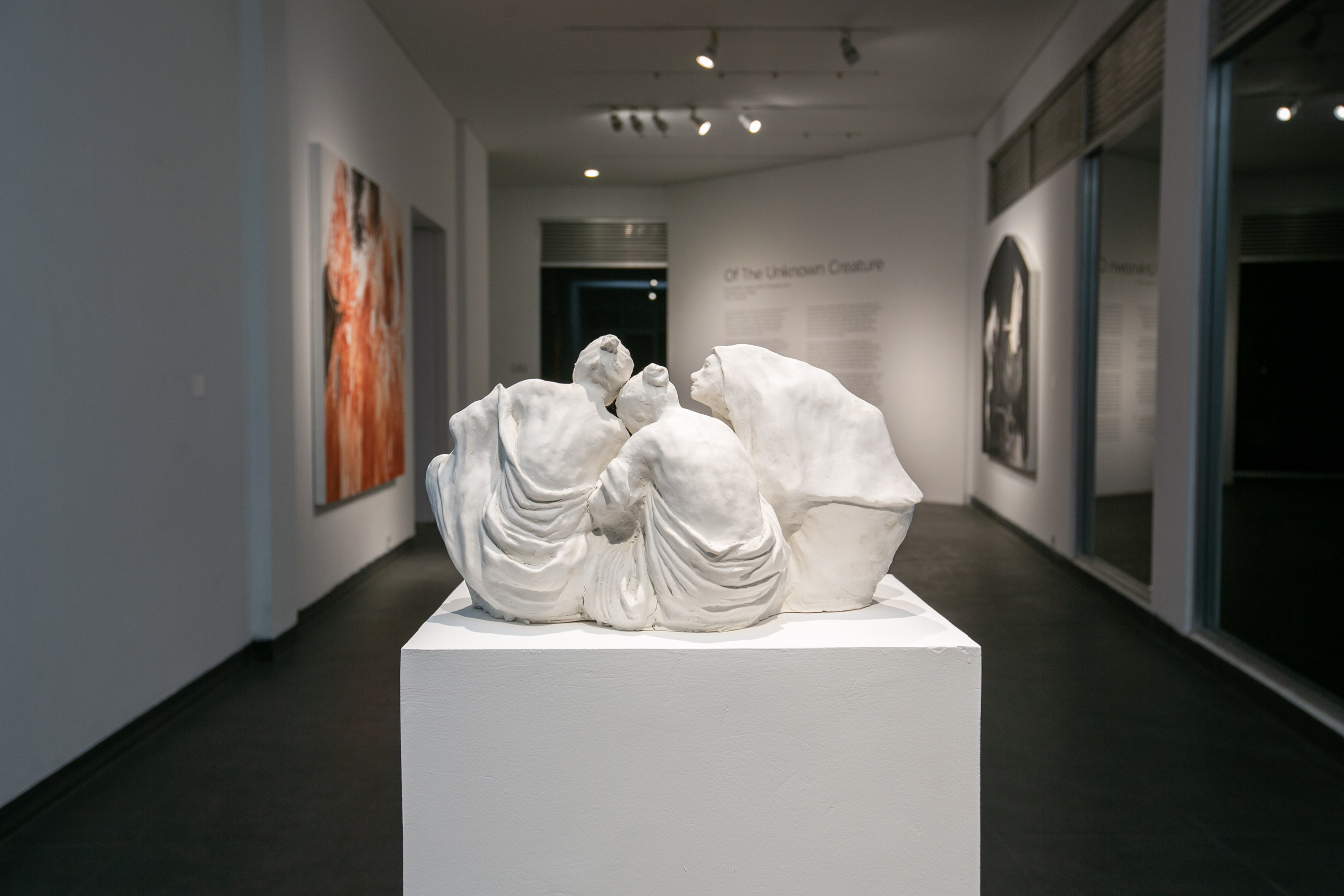
Dzikra traces her attraction to clay back to her time studying sculpture. Yet what held her was not simply the material itself, but the process it undergoes on clay becoming ceramic, something she found more compelling than other material approaches she encountered. It seems, too, to reach further back than that. She recalls a moment of quiet surprise: while her fellow students struggled to work the clay, she did not. From the very beginning, when first given the task, it felt as though she already knew what to do. Not something learned, exactly, but something recognised. As though her hands had arrived at an understanding ahead of her thoughts. She knew, almost immediately, how to “hold” the clay.
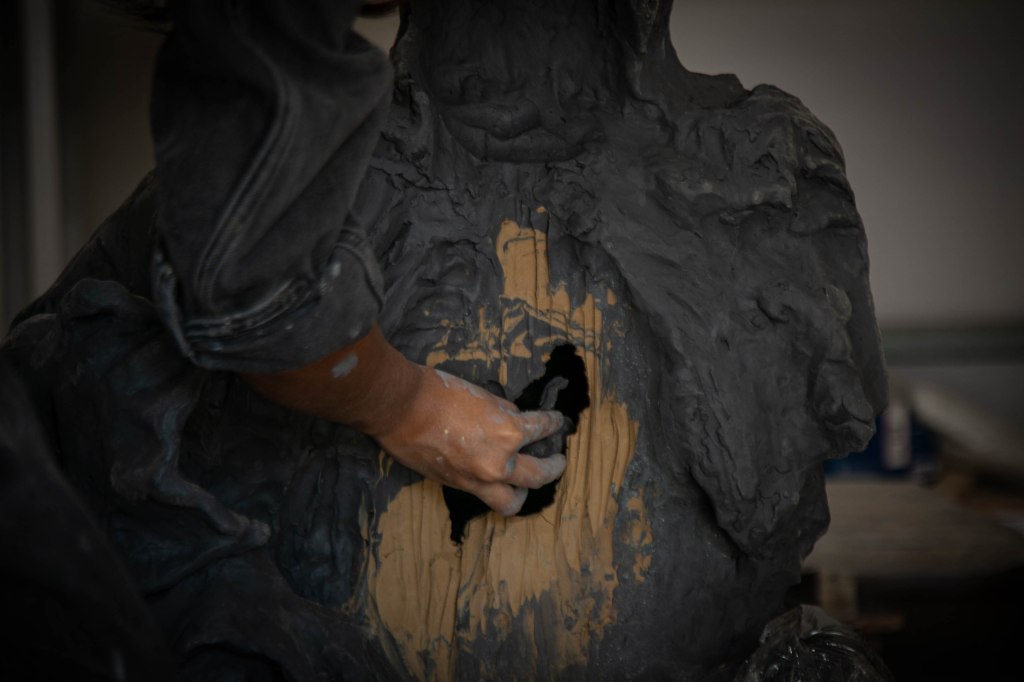
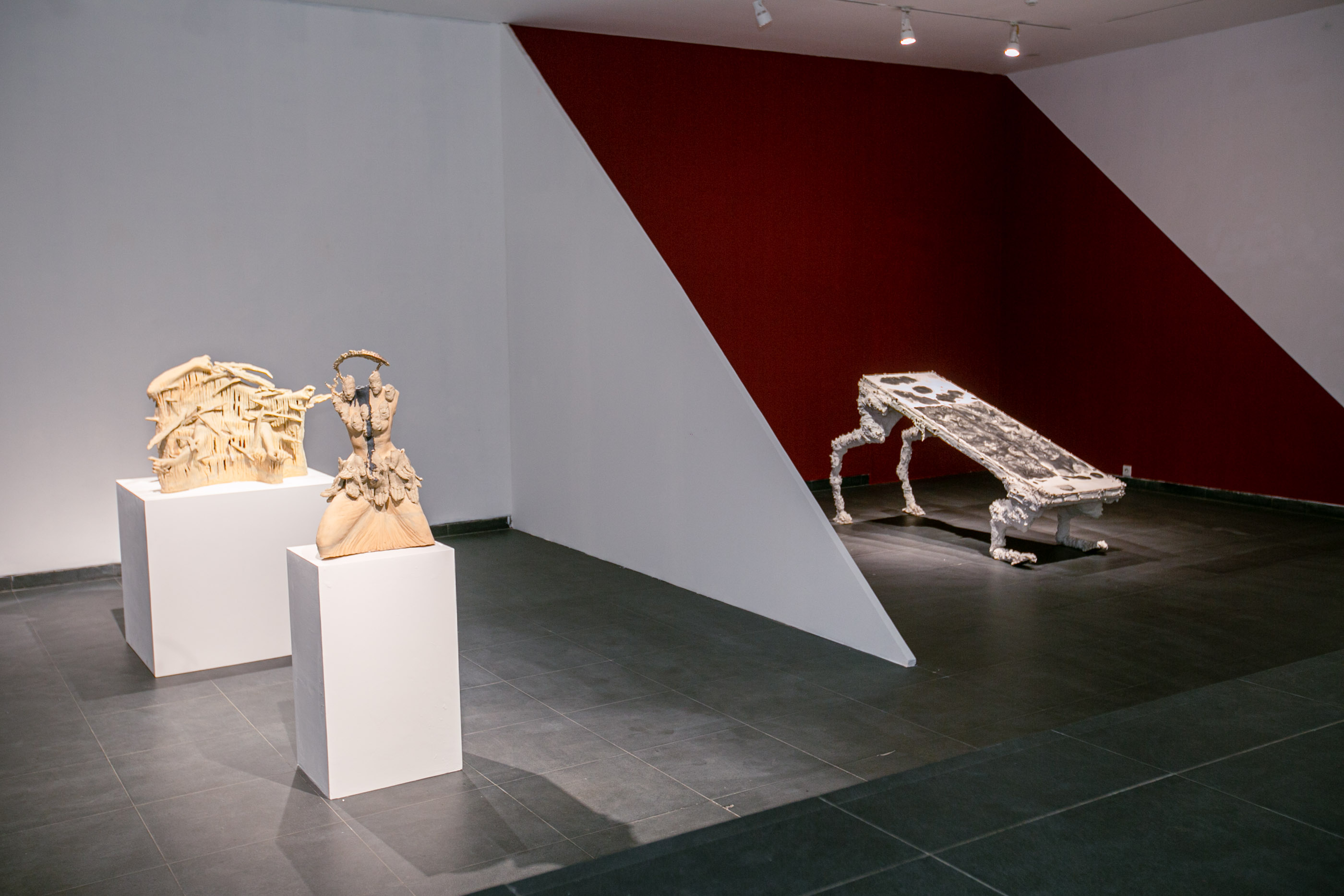
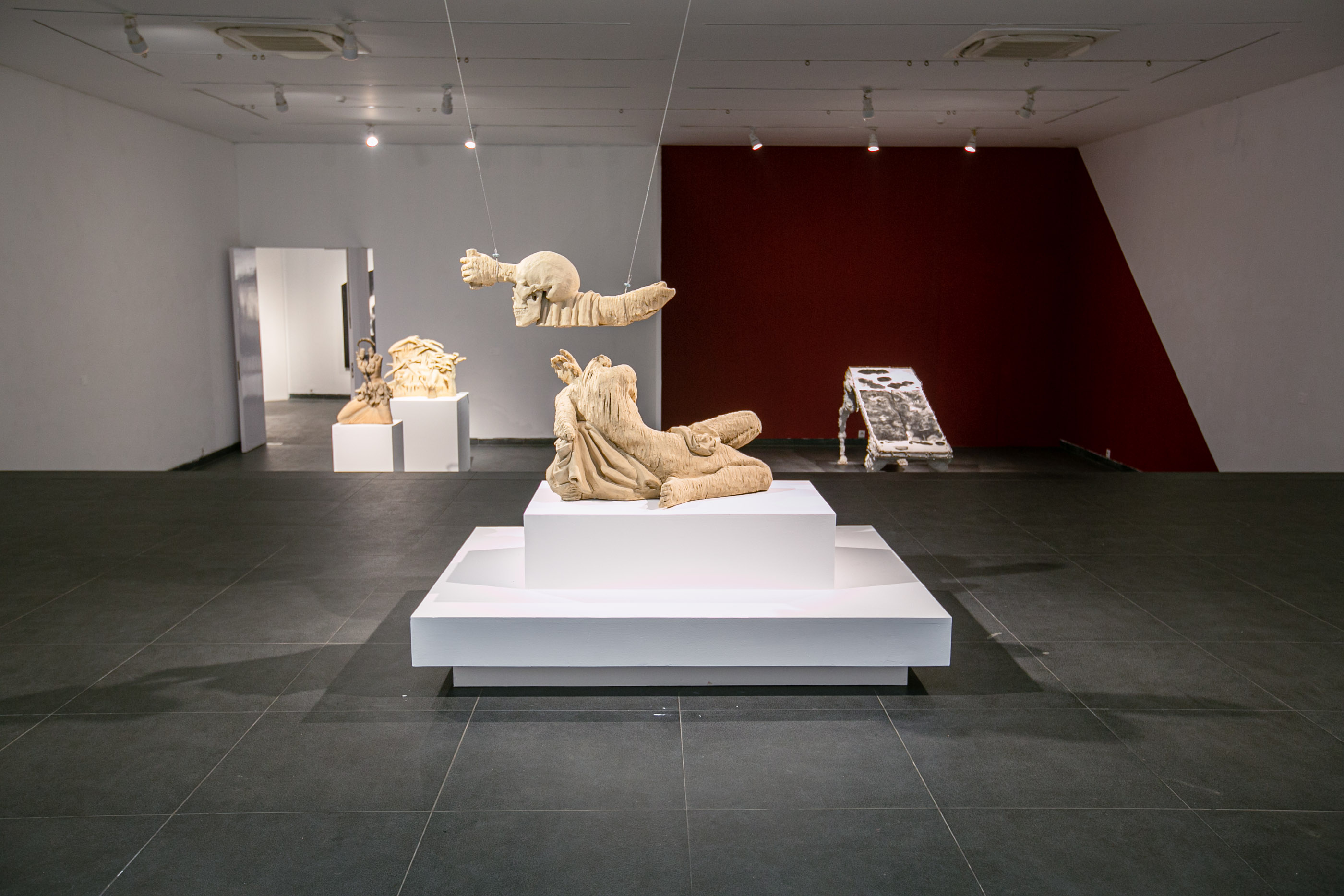
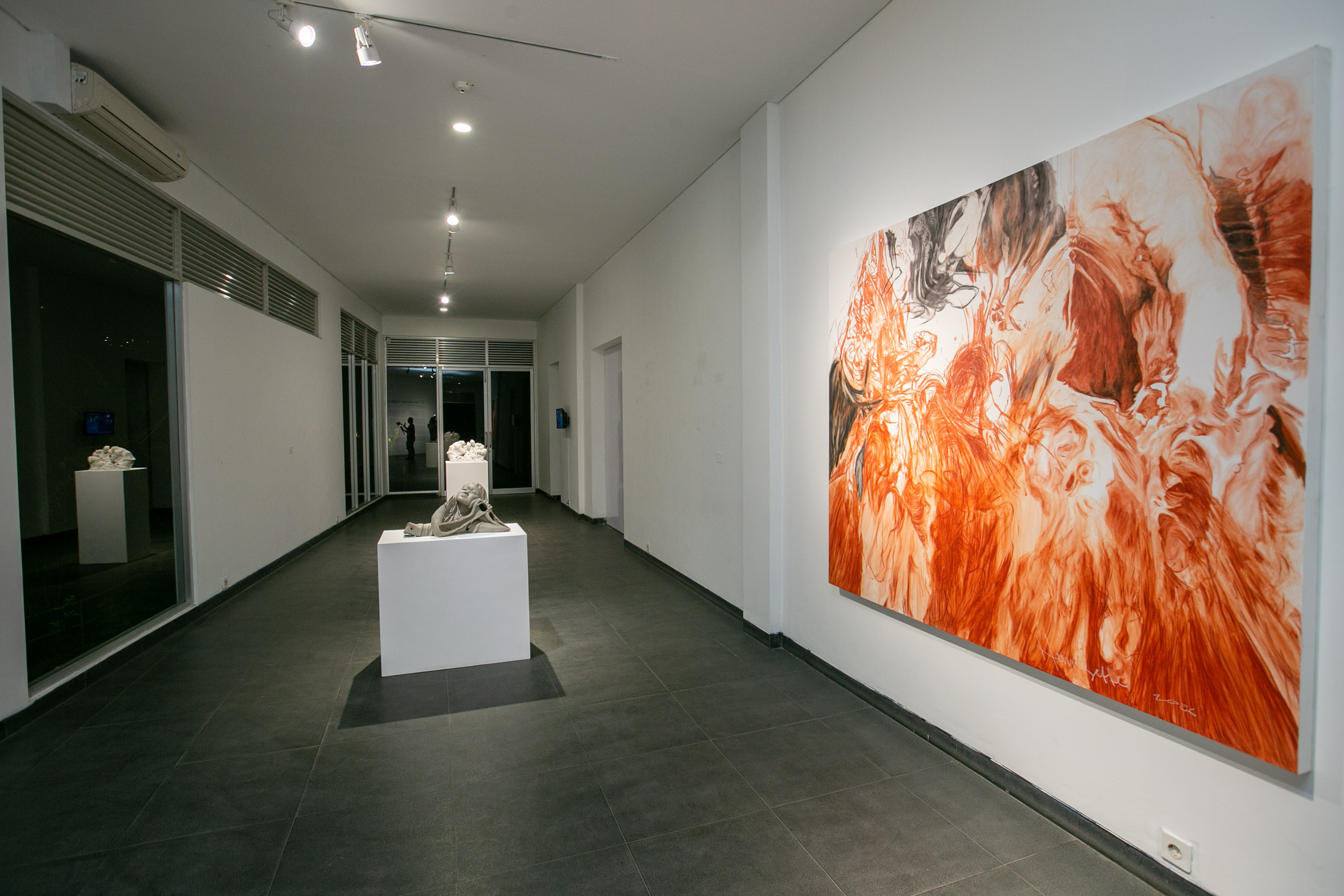
In the exhibition Troublemaker Doppelganger, I had already seen how Dzikra’s focus settles on the body. What stands out most in her treatment of the body is its condition: it appears repeatedly in states of torsion and fragmentation. The form is never simply given; it is unsettled, pulled away from its own coherence. She is particularly drawn to the legs. One senses a careful attention there, a sustained looking, along with an ease in translating those observations into ceramic form. And yet, the body never arrives as whole. It is consistently rendered in parts, cut, interrupted, dispersed. Dzikra clearly possesses the ability to depict the body in its completeness, even in its beauty, and yet she does not do so. It is as though something continues to intrude, resisting the body as a unified image and preventing it from settling into resolution. A disturbance, perhaps, difficult to name, yet persistent.
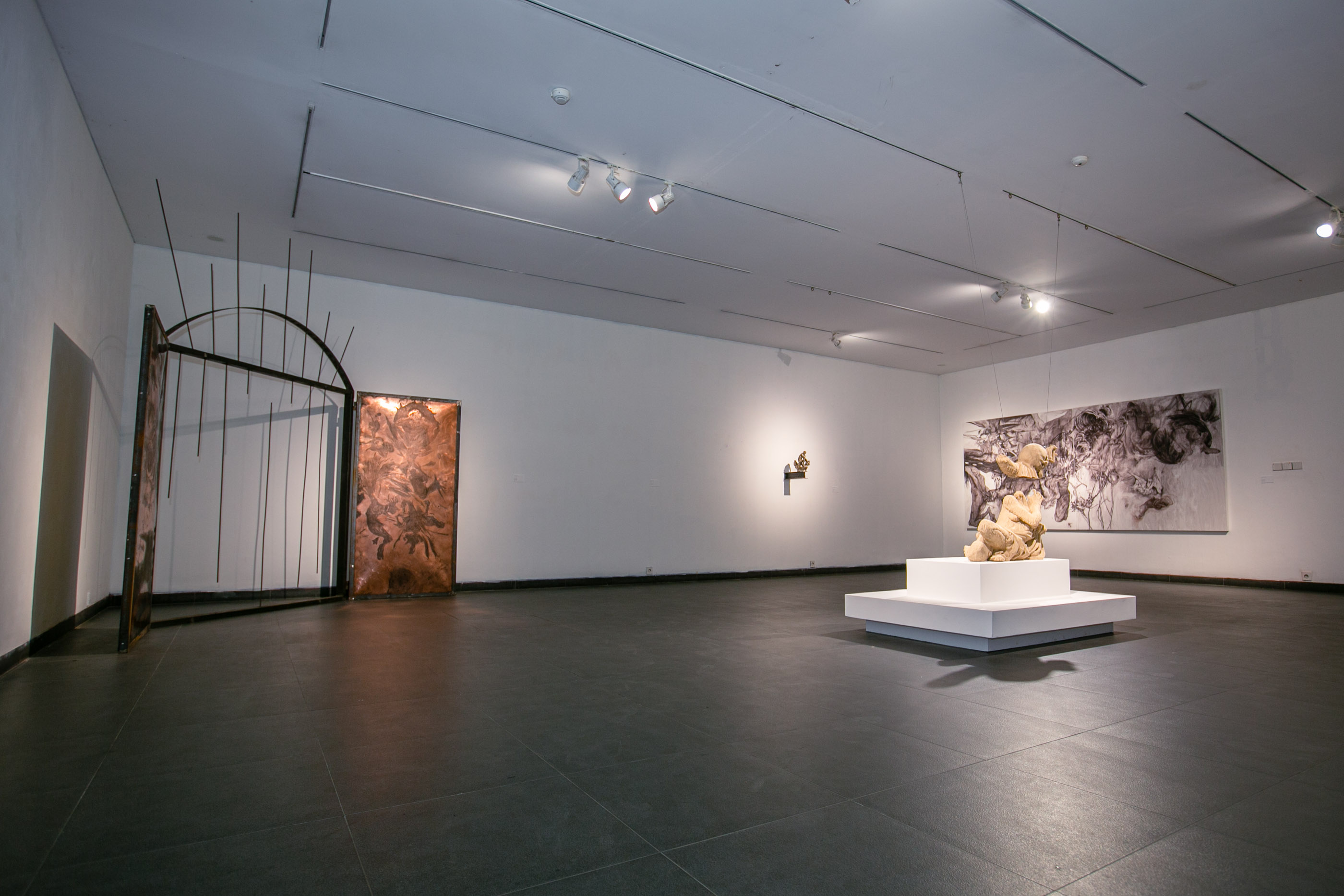
Let us set that question aside for the moment, and turn to Louise. Observing the images of her works, one has the impression that they are more “abstract.” It becomes more difficult, somehow, to identify forms within them. There are bodies, still, and they are similarly fragmented, more tightly twisted. Line comes forward more prominently in Louise’s two-dimensional works. She draws repeatedly, tracing and retracing, allowing the image to build through accumulation.
Louise has a background in scenography. This seems to align with her temperament. She is drawn to the technical, and is adept at working through it, in the sense of techne. She understands how things are made, whether through construction, electrical systems, or structural arrangements. And when something lies outside her knowledge, she will seek it out, examining it closely, following it through, until it becomes something she can work with.
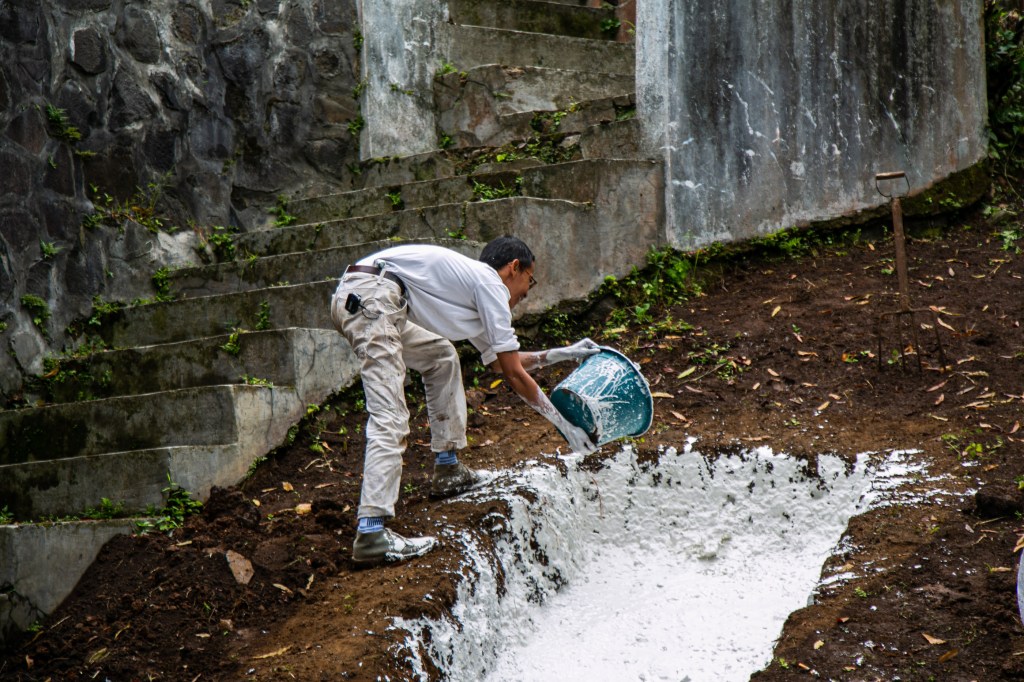
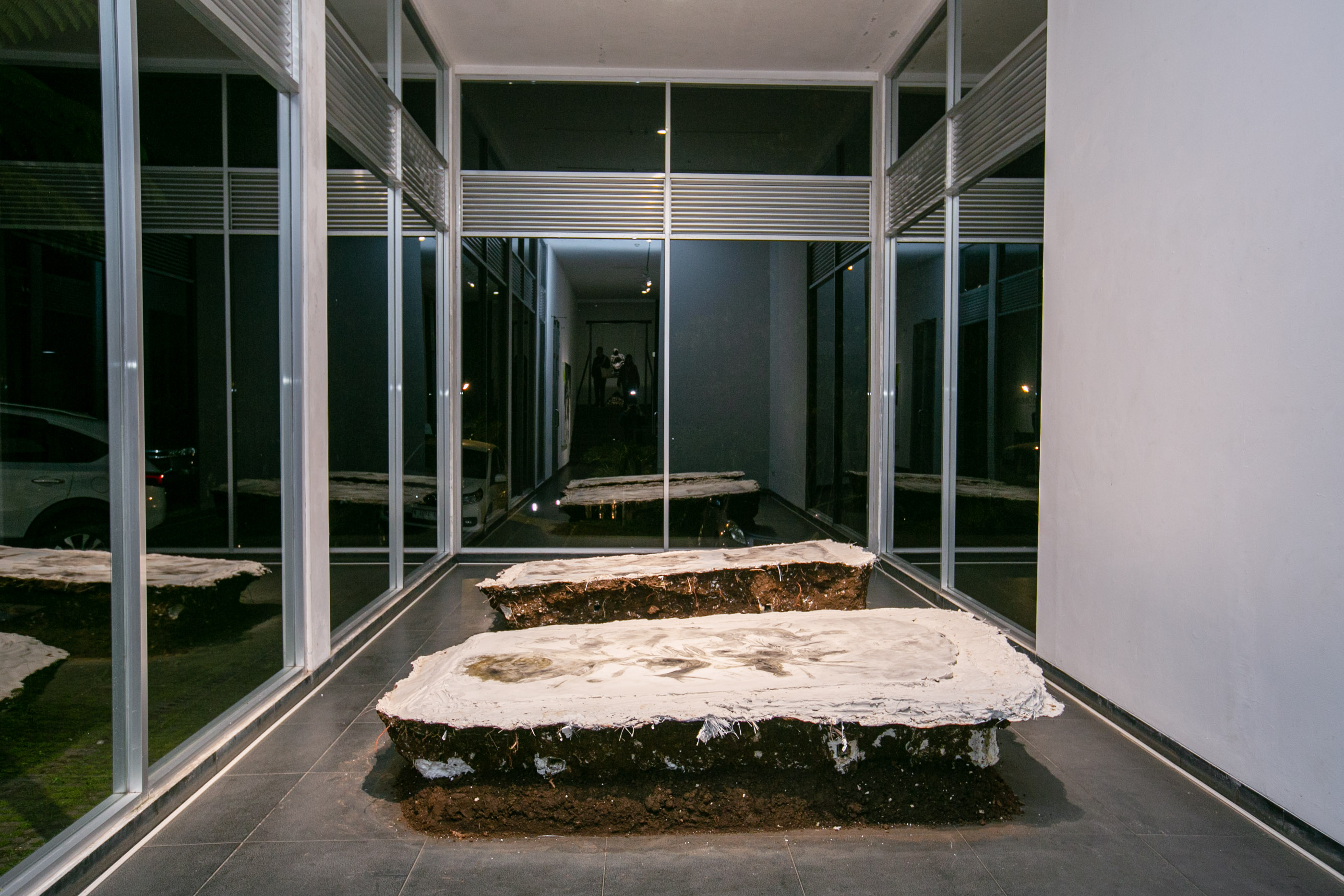
It is this temperament, this character, that brings her to the combination of intaglio and plaster. Louise has a particular relationship with printmaking, and her residency at the Devfto Printmaking Institute in Bali seems to have deepened her conviction to work with the intaglio method. She applies this method to plaster, rather than paper. In printmaking, the matrix is typically printed onto paper using a press. The matrix lies below, the paper above, so that the transfer of ink from matrix to paper relies on the pressure of the machine, rather than gravity. Louise’s gesture is to reverse this process. The matrix is placed above, the plaster below. The transfer of ink comes to depend on gravity.
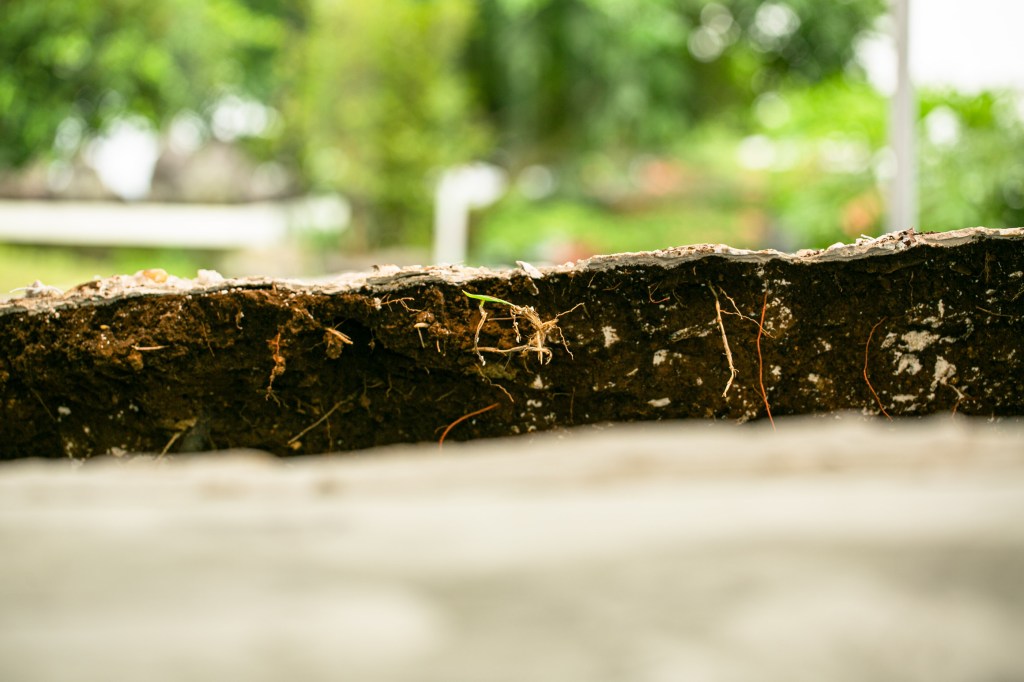
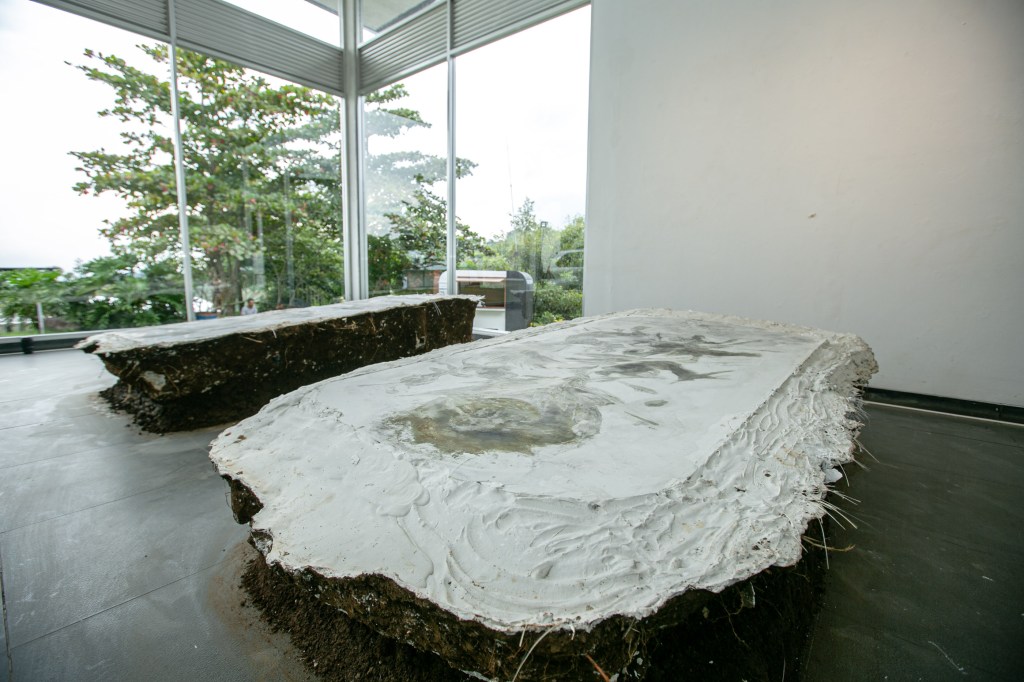
She began by digging into the ground of her yard. This time, she was working with a large plate, a full sheet of copper measuring 1,2 by 2,4 metres, and so required a correspondingly large plaster surface. The plaster was cast directly into the hollowed earth, and the plate placed across its upper surface. Working in this way, she found herself having to account for the elements, temperature, humidity, and the like. The move from East to North Bandung, she notes, has also affected the behaviour of the plaster. Since living in the north, she has come to realise that there are no plaster craftsmen in that area. She understands this as something shaped by natural conditions, above all humidity.
It seems to me that the way Louise works is closely aligned with her temperament. The way she works through intaglio and plaster appears to emerge from it. But here I want to shift the perspective slightly: what if this alignment does not begin solely with the temperament of the artist, but also with the temperament of the material?
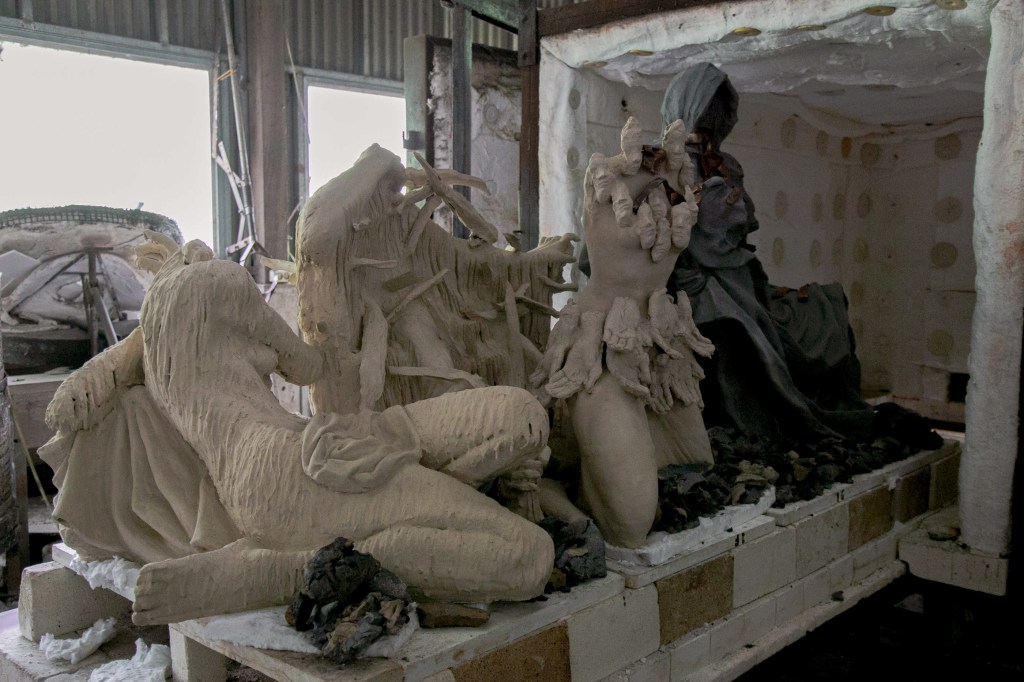
For Dzikra, once the work with clay reaches a certain point, the next phase is to surrender it to the kiln. In the encounter between hand and clay, what takes place is not only shaped by references drawn from the history or other narratives, but also by the clay itself. The contact between body and clay can become deeply intimate. And after such intimacy, there is a moment at which she must let go. The firing process unfolds under conditions that exceed her control. When the work returns from the kiln, carrying with it certain “surprises,” unexpected colours, the emergence of cracks, the material asserting itself. They belong to the behaviour of the material. Meanwhile, Louise’s print-making process, this time, places her in closer exposure to natural elements. The plaster casts are left open, carrying traces of soil, roots, small stones, and other matter that gathers there.
The works of Dzikra and Louise in this exhibition are diverse, but I do not move through them one by one. It seems more urgent to remain with a single question, the one I raised at the start. What keeps the artists in a state of disturbance, so that the body never appears whole, never settles? Perhaps it is in the way they relate to material, with space included in that relation. Both Dzikra and Louise allow a space between their own intentions and what unfolds in the process, and at the far end of it all, the work meets the forces of nature.
A professional artist returns again and again to the material that will become the work. Knowledge is sharpened, again and again. And yet there is always more. Things that cannot yet be grasped, edges of understanding that remain just out of reach. Dzikra and Louise make room for this. They recognize the limits of what they can see, of what they can shape. And what lies beyond, what cannot yet be held, they meet openly, on equal terms with what they know. Both the grasped and the ungrasped are attended to, given the same weight, celebrated in their practice.
Heru Hikayat
 Dzikra Afifah